|
|
|
|
|
|
|
|
|
|
|
|
 |
 |
 |
 |
 |
 |
 |
 |
 |
 |
 |
|







Coral Reefs
In this episode we'll learn:
- Where rainforests are found
- Rainforests of Mexico (case study)
- Why rainforests thrive
- What cultures live in rainforests
- Problems in the forest
Coral Reef Communities
 To
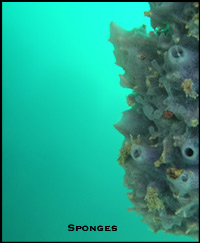
talk about a coral reef, is to talk about a diverse assemblage of
plants and animals that live together in an aquatic medium, filling
many different niches. Its hard to not mention diversity when examining
this system. The number of species on a reef rivals that
of the tropical rainforest.
To
talk about a coral reef, is to talk about a diverse assemblage of
plants and animals that live together in an aquatic medium, filling
many different niches. Its hard to not mention diversity when examining
this system. The number of species on a reef rivals that
of the tropical rainforest.
Mexico has two unique reef assemblages, those on the east coast; made famous by the Cayman islands and Cozumel, and those on west coast - that despite being less dived, are home to an entirely different set of organisms. The reason lies in the fact that tropical water from the Atlantic has historically mixed only during infrequent interglacial periods when the sea level was high enough to go over the strait of Panama. Today a few species have made it back and forth - but not many.
The west coast of Mexico is much cooler than the east. Waters from California flow down the coast and deep ocean water wells up along its edges. This creates a habitat rich in nutrients, not always the best for coral reefs. Thus, divers who have dived in Cancun may find these waters a disappointment. But, to the trained naturalist, they are a rare and unique opportunity to observe wildlife not seen by most. Few coral species for instance, are found in the cool western waters. There are coldwater fish as well. One of best places to see large pelagics also lies just offshore.
 The
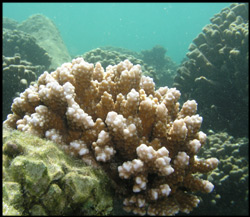
secret to the coral reef habitats, however, lies in the corals themselves. Without the corals, you couldn't really call it a 'coral'
reef. Corals are basically made up of many individual little
animals called coral polyps, related to anemones and jellyfish.
Each coral polyp is tiny, but working together with other coral
polyps they form large coral heads. It's like many people in one
apartment. These coral heads stand independently, but together with
many others form large reefs. That's basically like many apartments
forming a city. Together many reefs form large reef networks, like
Australia's Great Barrier reef, a feature that can be seen from
space. Amazing!
The
secret to the coral reef habitats, however, lies in the corals themselves. Without the corals, you couldn't really call it a 'coral'
reef. Corals are basically made up of many individual little
animals called coral polyps, related to anemones and jellyfish.
Each coral polyp is tiny, but working together with other coral
polyps they form large coral heads. It's like many people in one
apartment. These coral heads stand independently, but together with
many others form large reefs. That's basically like many apartments
forming a city. Together many reefs form large reef networks, like
Australia's Great Barrier reef, a feature that can be seen from
space. Amazing!

|
|||
|